
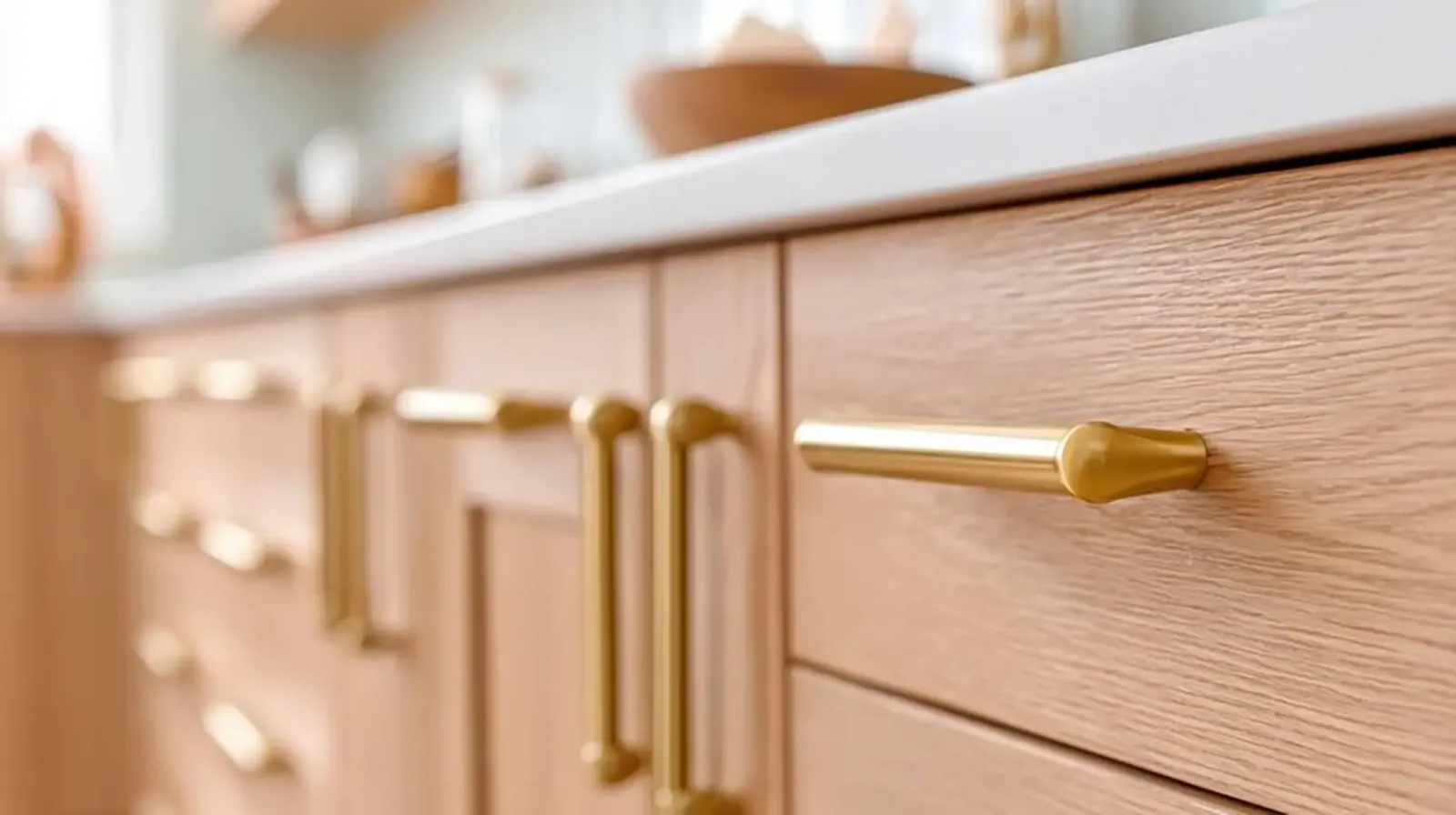
Your kitchen cabinets look tired. The finish is yellowed, the doors show wear around the pulls, and every time you open Pinterest you start imagining something brighter. The question most homeowners land on pretty quickly is: do I replace everything or can I just refinish what’s there?
In South Florida, that decision has a few wrinkles that don’t come up in other parts of the country. Here’s how to think through it honestly.
What refinishing actually means
Cabinet refinishing means stripping or sanding the existing finish, making any minor repairs, priming, and applying new topcoats — usually sprayed on for a smooth, factory-quality result. The box stays. The doors and drawer fronts stay. What changes is the surface, the color, and the overall appearance.
A well-prepared finish can give existing cabinetry a fresh, cohesive appearance. When comparing quotes, look at the included surfaces, repairs, preparation and coating system alongside the price. Review a finished sample to decide whether the appearance suits your kitchen.
Cost comparison for the Treasure Coast and South Florida
Ballpark numbers for a typical kitchen (30–40 linear feet of cabinets):
- Full replacement: $15,000–$50,000+ depending on cabinet brand, layout changes, and new hardware. Confirm whether installation, countertops, disposal and layout changes are included in the replacement quote.
- Cabinet refinishing: A full-kitchen planning range of $4,000–$7,000, depending on door count, condition, and finish type. You retain suitable existing cabinetry and layout. Budget roughly $200–$400 extra for a significant color change; hardware changes are quoted separately.
That’s a significant gap. For many homeowners, refinishing frees up budget for the things that actually change how a kitchen functions — better appliances, new counters, a backsplash.
When refinishing makes sense
Refinishing is a strong choice when:
- The cabinet boxes are structurally sound. If the frames are solid wood, plywood, or quality MDF with no water damage or delamination, refinishing makes sense. Soft or swollen material won’t hold a finish well.
- You’re happy with the layout. Refinishing changes the look, not the footprint. If the workflow works for you, there’s no reason to blow up the whole kitchen.
- You want a specific color change. Going from honey oak to a clean white or a navy island is exactly what refinishing does well.
- You’re preparing to sell. A fresh finish on tired cabinets adds immediate visual appeal without the ROI gamble of a full remodel.
When replacement may be the better path
Sometimes replacement is genuinely the right answer:
- The boxes are compromised. Swelling, delamination, soft spots or evidence of water intrusion need assessment. Damaged material may require repair or replacement before a finish can be applied.
- You need a different layout. Opening a wall, adding an island, or changing traffic flow requires new cabinet runs. Refinishing can’t address that.
- The door style is dated beyond saving. Refinishing keeps the existing door profiles. If you have very ornate 1990s raised-panel doors and want flat-front or Shaker style, you’d need to replace the doors — at which point the cost gap narrows and replacement starts making more sense.
- The material is damaged or unsuitable. Swollen manufactured board, delaminated veneer or a failing wrap may require repair or replacement. Suitability depends on the actual surface, not a blanket rule about the age of the cabinets.
Florida-specific considerations
Cooking moisture, everyday handling and conditions around sinks and appliances affect cabinet finishes. We select Sherwin-Williams preparation and coating products for the existing material and condition, with working conditions and care instructions matched to the specified system.
HOA color restrictions apply to some townhomes and condos — check your documents before committing to a color if you live in a managed community, even though interior cabinets typically fall outside HOA scope.
Choose the right scope for your kitchen
If your cabinetry is structurally sound and the layout works well, refinishing can create a substantial visual change while keeping the pieces you already have. Our six-month cabinet finish warranty explains covered failures and exclusions.
If you’re not sure which path makes sense for your kitchen, we’re happy to look and give you a straight answer. We’ll tell you if refinishing isn’t the right fit for your situation — no pressure either way.
Request a free written estimate and we will confirm availability and the next step.
Also in this series: How long does cabinet refinishing last in Florida’s humidity? and What to expect: the cabinet refinishing process, step by step